How Automated Proposal Workflows Cut the Time Between Estimate and Signed Contract in Half
You sent the estimate. You followed up once, maybe twice. Then silence.
Three days pass. You call again. They went with someone else.
This is not a pricing problem. It's not a relationship problem. It's a timing problem, and most service businesses are losing it quietly, every week, without knowing exactly where the job walked out the door.
The contractors closing faster in 2026 aren't making more calls. They're running proposal workflows that do the chasing for them.
What an Automated Proposal Workflow Actually Is
An automated proposal workflow is a follow-up system that activates the moment an estimate leaves your hands.
No manual triggers. No relying on someone to remember. The second that proposal goes out, a sequence starts running, timed messages, objection prompts, contract delivery, signature reminders, until the prospect responds or opts out.
The goal isn't to flood a prospect's inbox. It's to stay present at exactly the right moments without pulling your team off billable work to babysit open quotes.
That distinction matters. A workflow isn't pressure. Its structure is applied to a stage of your sales process that currently has none.
What the Manual Process Actually Costs You
Most service businesses treat the proposal stage as a passive hand-off. The estimate goes out. Owner waits. If nothing comes back, someone remembers to follow up, or they don't.
That gap is where revenue disappears.
The average B2B service prospect decides within 72 hours of receiving multiple quotes. If your follow-up happens on day five, you're not losing on price. You're losing on response time.
Manual proposal management also creates a visibility problem. Which estimates are open right now? Which ones have gone cold? Which ones are actually worth chasing? Without a system tracking that in real time, those answers live in someone's memory, which means they're unreliable the moment that person gets busy.
Jason Trester has worked with scaling service operations for over 42 years. The pattern he sees repeatedly: businesses that lose the most proposals aren't losing them on the job site. They're losing them in the 96 hours after the estimate goes out, when nothing structured is running.
What the Automated Version Looks Like
Here's the same proposal stage, run through a structured workflow system versus being managed manually.
The Sales Transformation - Manual vs. Automated
1. The Initial Pitch (Estimate Phase)
The Manual Way: You email a PDF manually and wait. There is no visibility into whether the prospect even opened the file.
The Automated Way: The system auto-delivers the estimate. It includes a read-receipt trigger, notifying you the second they are looking at your numbers.
2. The Nurture Cycle (Follow-up & Objections)
The Manual Way: Follow-ups happen only when the owner remembers. Often, objections (like price or timing) are never addressed because the prospect simply "ghosts" after a few days of silence.
The Automated Way: A timed SMS and email sequence begins immediately. On Day 2, a conditional message automatically asks, "Any questions before you decide?" to surface concerns before they turn into a "no."
3. Closing the Deal (Contract & Signature)
The Manual Way: You wait for a verbal "yes" to send a contract. If they don't sign right away, you have to call and chase them down manually.
The Automated Way: The contract is triggered the moment an interest signal is detected. An e-sign link is sent instantly, with automated reminders firing at the 24-hour and 48-hour marks if the document remains unsigned.
Why This Matters
The primary difference isn't just speed; it's consistency.
Manual processes rely on your "peak energy" - if you have a busy day, the follow-up doesn't happen.
Automated workflows rely on logic - the follow-up happens whether you are in a meeting, asleep, or on vacation.
The difference isn't effort. It's accountability built into the process itself.
When a prospect opens your estimate, the workflow already knows. When three days pass without a response, the system sends a check-in, not because someone remembered to schedule it, but because the trigger was set up once and runs on its own from that point forward.
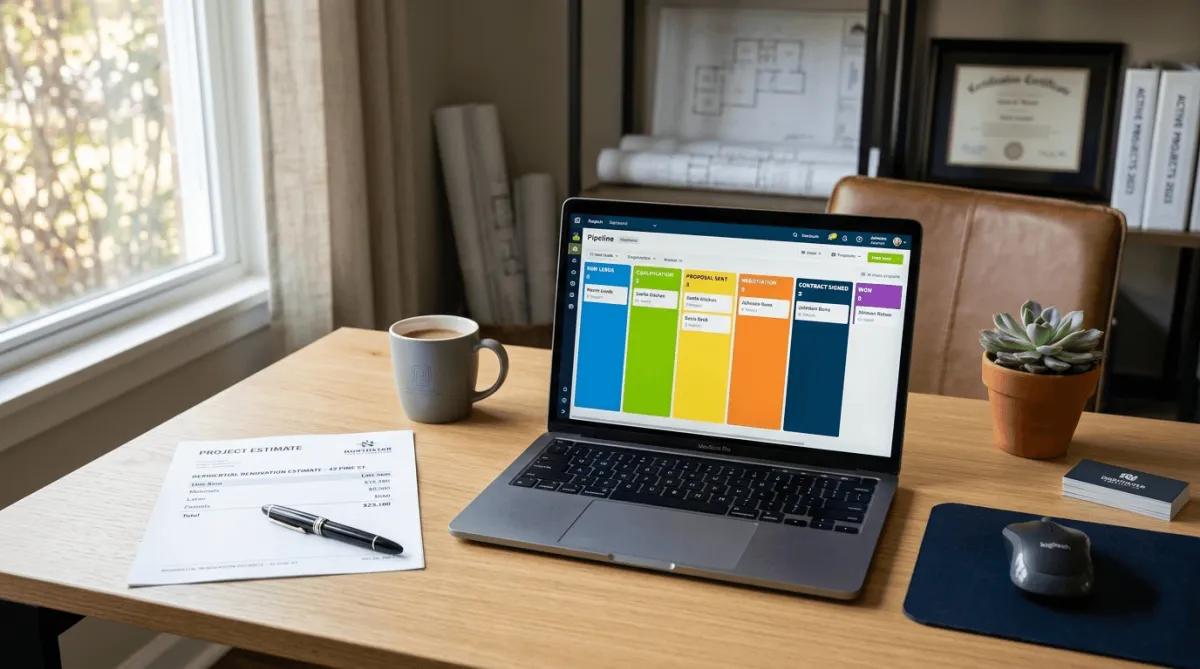
Your team doesn't need to track any of it. The pipeline reflects exactly where every open proposal stands, in real time, without anyone manually logging updates at the end of a long day.
Signs Your Proposal Stage Needs a Workflow
Some of these will be obvious. Others won't show up until you look at your close rate against your estimate volume.
You're losing jobs to competitors who responded faster, not cheaper. Proposals go cold after the first three days with no structured follow-up in place. The owner or sales lead is personally chasing every open quote because no one else is tracking them. You have no reliable way to tell which estimates are genuinely active versus quietly dead. Contract delivery happens only after a verbal yes, which means there's always a delay between agreement and paperwork. Your team is spending hours each week on follow-up calls that a sequence could handle automatically.
Any one of these signals a gap. More than two means the proposal stage is the primary place your pipeline leaks revenue.
When This Pays Off Most
Automated proposal workflows deliver the clearest return in businesses where the sales cycle runs longer than 24 hours, and the team is too busy to manually manage every open quote.
Roofing, HVAC, landscaping, remodeling, commercial cleaning, pest control, any high-ticket service where the estimate-to-signature window involves real decision-making time. These are the operations where a structured workflow closes the gap between "we'll think about it" and a signed contract without requiring a dedicated follow-up person on staff.
Marketing Masters CRM runs exactly this way. When an estimate goes out, a follow-up sequence starts within minutes. Day 1 delivers a confirmation message. Day 3 surfaces a soft objection prompt. Day 5 sends a plain-text check-in from the owner's contact. If the prospect signals interest at any point, contract delivery fires automatically, with an e-sign link embedded and a reminder built in for 24 hours later.
One plumbing operation using this system recovered $43,000 in stalled estimates within 60 days. The leads weren't new. The follow-up system was.
That result doesn't come from working harder. It comes from building a structure around a stage of the sales process that was previously running on memory and goodwill.
Build the Workflow Once. Let It Run.
The proposal stage isn't where most service businesses focus their attention. That's exactly why it's where most of them bleed.
A structured follow-up system turns your estimate pipeline from a guessing game into a documented, trackable process. You know what went out, who opened it, what sequence is running, and what's genuinely worth a direct call from your team.
That's not a luxury operation. That's a basic operational standard for any service business serious about closing more of what it already earns.
Apply for Automation Implementation
Marketing Masters works exclusively with established operations ready to build systematic lead capture and follow-up infrastructure. If your proposal stage feels harder to manage than it should, the assessment starts by identifying exactly where the breakdown is happening.
Qualification requirements: Verified business, multi-crew or multi-site operations, demonstrated commitment to systematic growth. Call 763-325-9378 or submit your application at: https://marketingmasters.me/business-assessment-form